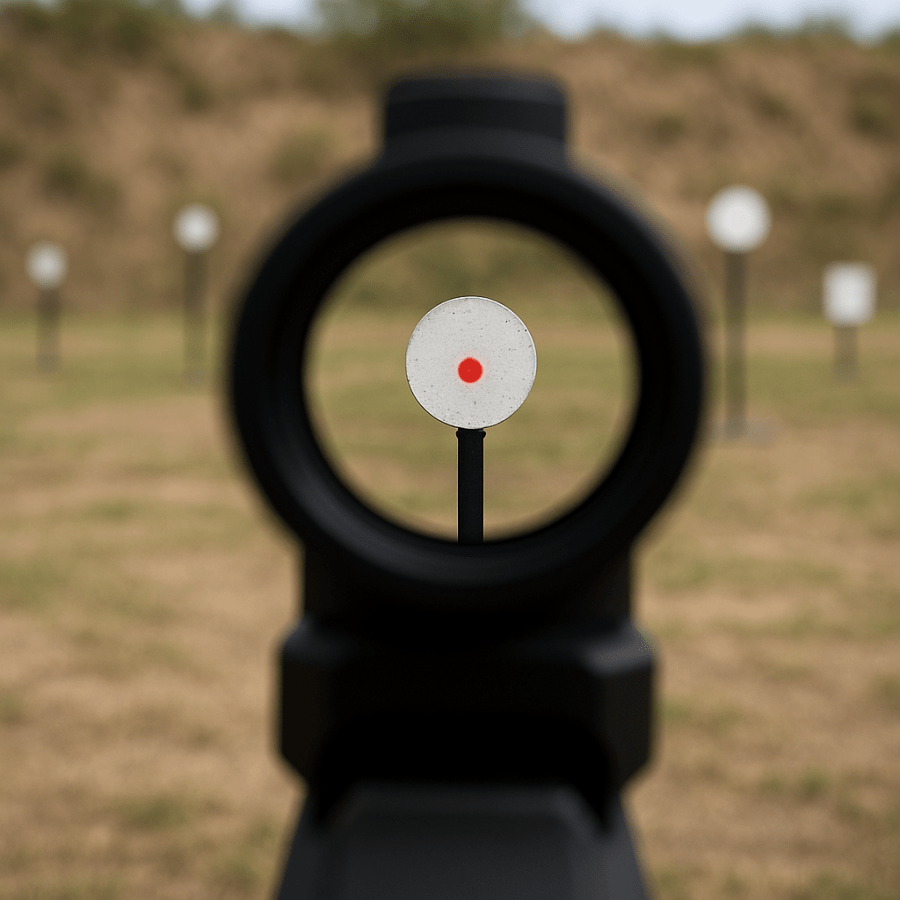

How to Train Hard Dot Focus Using a Plate Rack: A Fast Way to Improve Your Visual Speed

If you’re looking for a simple, brutally effective way to train your visual shooting speed, nothing beats the Plate Rack. It is the perfect tool for developing Hard Dot Focus is one of the most overlooked, misunderstood, and powerful visual techniques in practical shooting.

Whether you shoot Steel Challenge, Rimfire Challenge, SASP, Metal Madness, or Glock Sport Shooting Foundation (GSSF), or you simply want to make your transitions smoother and your times faster, learning how to see is what unlocks true speed. And the Plate Rack gives you instant, undeniable feedback about whether your visual technique is working.

Training Banner Link:


GSSF-3 Stage Dry Fire Banners


What Is Hard Dot Focus?

Hard Dot Focus means your visual focus stays locked on:

  • the dot (if shooting an optic), or
  • the front sight (if shooting irons),

With Hard Dot Focus:

  • Plates blur slightly in the background
  • Your aiming reference remains crisp
  • You break shots the instant your dot intersects the plate
  • You eliminate wasted time shifting focal planes
    • At the speeds the fastest shooters shoot, these fractions of a second add up!

This is why it is faster than traditional Plate Focus, where your eyes bounce back and forth between the dot and the target.


Why the Plate Rack Is the BEST Tool for Training Hard Dot Focus

The Plate Rack is visually simple, unforgiving, and honest.

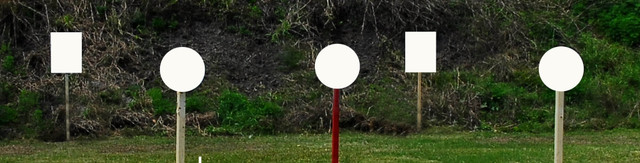
Example: The 8″ GSSF Plate Rack

A great example is the GSSF Plate Rack, which uses 8-inch plates.
With plates all equal in size and evenly spaced, any hesitation or visual inefficiency shows up instantly on the timer.

That consistency makes it the perfect environment to feel the speed difference between:

  • Plate Focus
  • Hard Dot Focus

When Hard Dot Focus is executed correctly, your transitions feel smoother, your dot arrives sooner, and the plate rack becomes a rhythm and not a struggle.


How to Train Hard Dot Focus on a Plate Rack

Step 1: First Shot = Target Focus

Just like in Steel Challenge, your first shot you use a Target Focus.

Start at low ready.
Your eyes are on the plate.
Let the dot or front sight appear into your vision.

This ensures a clean sight picture on the plate and press the trigger.

Step 2: Shots 2–6 = Hard Dot Focus

Once the first plate is hit:

  • Lock your eyes onto the dot or front sight
  • Keep your visual focus glued to it
  • Let the plates blur in the background
  • Break each shot as soon as the dot sees the plate

Your eyes DO NOT jump back to the plates.
Your transitions become smoother because your visual reference never changes.

Hard Dot Focus removes:

  • hesitation
  • target re-acquisition time
  • visual “hunting”
  • unnecessary focal shifts

This is why your times drop even though the run may feel slower and calmer.


Your Brain Sees More Than You Think

Shooters often worry they “won’t see the plates clearly” if they focus on the dot.

This is incorrect.

Your eyes naturally pull in more information than you realize, even when focusing on the dot or front sight. Your peripheral vision still provides:

  • plate spacing
  • rack alignment
  • the plate centers
  • natural timing
  • subconscious aiming cues

You will be able to call your shots better than before because you will realize where the dot or front sight was when you squeezed the trigger.  If you don’t know where that was, you went back to a Target Focus.


Bring Plate Rack Training at Home

Hard Dot Focus becomes extremely powerful when you can train it consistently and that’s where the right dry fire tools matter.

For GSSF shooters or anyone who wants to practice on full-size 8″ plates at home, the GSSF Dry Fire Banners replicate exact plate spacing and visual size.

GSSF Dry Fire Banners:

https://creeksidecustomlasering.com/gssf-3-stage-dry-fire-banners/

These banners allow you to:

  • Train Hard Dot Focus safely at home
  • Learn the timing and rhythm of a plate rack
  • Maintain visual discipline
  • Build confidence before a match

Perfect for Glock shooters looking to sharpen plate rack performance.


Final Thoughts: Hard Dot Focus Makes You Faster. Period.

To summarize:

  • First shot = Target Focus
  • Every shot after = Hard Dot Focus
  • Trust your peripheral vision
  • Let the dot lead plate-to-plate
  • Let speed come from visual efficiency, not effort or panic

Remember, if you have a hard dot focus when you are shooting, it will seem slow.  Why does this happen?  The sense of panic is gone.  You will be in control.  Your eyes will not be racing back and forth between focal points.  It will feel ‘easy’ to shoot well and fast.

Train consistently.  10-15 minutes 3 days a week, especially on a Plate Rack and your speed, confidence, and times will improve dramatically.

See you out on the range soon!

Steve
How to Dry Fire for Maximum Speed and Accuracy: Two Proven Methods to Train Your Eyes and Shoot Faster

Dry fire is one of the most effective and accessible training tools for competitive shooters. Whether you’re working to improve your Steel Challenge times, preparing for Rimfire Challenge, SASP, Metal Madness or simply trying to become a more consistent and confident shooter, proper dry fire training will transform your performance.

In this guide, I break down how to dry fire, the two primary methods, and the visual techniques that helped me drastically improve my performance on Steel Challenge stages like Pendulum and Showdown.

Whether you shoot a red dot or iron sights, this post will teach you how to SEE faster—and shoot faster.

Training Banner Link:
https://creeksidecustomlasering.com/training/dry-fire-banners/


Why Dry Fire Training Works

Dry fire builds:

  • Faster transitions
  • Stronger visual discipline
  • Better shot-calling
  • Cleaner mechanics
  • Match-ready confidence

With no recoil or noise, dry fire isolates the most important skill in speed shooting:

Seeing.

If you want faster times on any stage your eyes are the KEY and must lead the way.


Dry Fire Method 1: Using a Par Time on Your Timer

Timers with par times are extremely helpful when learning the true pace of a stage. One of the best tools for this training is the AMG Lab Shot Timer, known for its reliability and ability to pick up dry fire trigger clicks (on sensitivity setting 10).

How Par Time Dry Fire Works

  1. Select the stage you want to work at (Pendulum, Showdown, etc.).
  2. Set a par time matching a competitive or GM-level string.
  3. Pointed at the low-ready; on the beep
  4. Try to complete all simulated shots within the time limit.

On visually intensive stages like Showdown, where rhythm and timing matter, par times help you understand how fast top shooters actually move.


Dry Fire Method 2: Running the Stage With or Without a Timer

This is the method I use most frequently because it trains visual processing instead of speed dependency.

You can still use your AMG Lab timer with a delayed start, but you don’t need a par time here.

How This Method Works

  • Set a delay beep—or go without a timer.
  • Start the run.
  • Actuate the dead trigger on each target.
  • Focus solely on what your eyes are doing and NOT how fast you’re going.

Why This Method Is So Effective

It develops:

  • Subconscious stage rhythm
  • Plate-to-plate timing
  • Natural transitions
  • Visual discipline
  • Calm, confident shooting
  • Reliable shot-calling

On stages like Pendulum and Showdown, where visual control determines everything, this method builds long-term consistency.


How to See Faster: Plate Focus vs. Hard Dot/Hard Front Sight Focus

Dry fire only works when you intentionally train your eyes. Here are the two visual techniques used by most top shooters.


Visual Technique 1: Plate Focus Shooting

This is the traditional, widely used method.

How It Works

  • Your eyes lead the gun to each plate.
  • You visually lock onto the plate.
  • The dot or front sight follows your eyes.
  • When the dot/site arrives on the plate, you break the shot.

When It Works Best

  • First shot on any Steel Challenge, Rimfire Challenge, Metal Madness, etc array

Plate Focus Shooting can be effective but not the fastest for transitions.


Visual Technique 2: Hard Dot or Hard Front Sight Focus (My Preferred Method and What I Teach)

This method is responsible for some of my biggest improvements and speed gains.

How It Works

  • Your visual focus stays locked on the dot (if shooting an optic)
    —or—
    On the front sight (if shooting irons)
  • Plates appear slightly blurred in the background
  • You break the shot the moment your dot/front sight sees the blur of white in the background.
  • You never shift your focal plane between shots

Why This Method Is Faster

  • Eliminates refocusing delays
  • Smooths transitions
  • Enhances shot-calling
  • Reduces visual hesitation
  • Lowers stage times by 5–10%

When I shoot like this, the stage is a two-dimensional array and I am in a Hard Dot Focus Shooting, it actually feels like I am shooting slow.


The Most Overlooked Concept: Your Eyes Pull in EVERYTHING

This is the part most people do not realize until someone shows them.  If you have been to train with me, this is the ‘finger’ and the ‘tree’ exercise.

Just because you’re focusing on the dot or front sight doesn’t mean you can’t see the rest of the array.

Your eyes naturally take in a massive amount of visual information even when you’re focusing intensely on your aiming reference.

When your focus is on the dot/front sight, your peripheral vision still sees:

  • The spacing of plates
  • The arrangement of the array
  • The overall stage landscape

Trust your eyes.
They will bring in all the information you need.

This trust allows you to:

  • Transition efficiently with fewer sight alignment adjustments as you get to the plate
  • You are now able to confirm shots with a higher degree of certainty
  • Shoot without hesitation
  • Stay calm and fluid
  • Let your subconscious drive the gun

Below is a visual representation of how this looks for an optic gun. This is how top shooters create runs that feel slow even though they’re faster than ever. Just remember, despite popular opinion the targets do not move when the timer goes off 😊


How I Combine Both Visual Methods in Dry Fire and ‘Shoot’ the Stages

Using Steel Shoot Dry Fire Banners, I follow the same sequence every time:

1. First Shot – Plate Focus

Ensures accuracy and a clean opening shot.

2. Shots 2–5 – Hard Dot / Hard Front Sight Focus

Delivers maximum speed, timing, and consistency.

This hybrid approach builds both accuracy and speed—and it transfers perfectly to live fire and matches.


Dry Fire Isn’t About Speed… It’s About Seeing

This is the core truth of dry fire:

You can only shoot as fast as you can see.

As your visual processing improves:

  • Your transitions clean up
  • Your dot/front sight stabilizes sooner
  • You call shots instantly
  • Your runs feel effortless
  • Panic (the “Foster Effect”) disappears

And your times drop even though the shooting feels slow.


Train Like a Pro at Home

To get the most out of dry fire, you need realistic plate layouts.
That’s exactly what Steel Shoot Dry Fire Banners provide.

They bring Steel Challenge stages like Pendulum and Showdown into your home or garage, giving you consistent, match-relevant training.

Check out the Steel Shoot Dry Fire Banners here:
https://creeksidecustomlasering.com/training/dry-fire-banners/

When you are Dry-firing, keep yourself honest.  Was the dot on the plate or not when you pulled the trigger.  “Cheating” yourself doesn’t do you any good out on the range.  You have to practice ‘perfectly’ to get better.  Try different methods and find the right combination for you.  When you combine the right dry fire techniques and your speed, transitions, and confidence will increase dramatically as you see your stage times drop!

See you out on the range soon!

Steve

The Pursuit of Perfection – Rimfire Pistol Iron Sights

As a competitive shooter, I am always looking for an advantage to shoot faster! One of my first ever Handguns was a Ruger Hunter on the traditional Standard Frame which most call the Target Frame. Being a 1911 fanatic, I prefer the 22/45 frame so I repurposed a spare 22/45 frame and placed the Ruger Hunter 6.88″ upper on it. Wow, did it feel amazing! I then added the Creekside Custom 19.22 https://creeksidecustomlasering.com/19-22-rimfire-trigger-for-ruger-volquartsen-tandemkross-pistols trigger with the Volquartsen Accurizing kit https://creeksidecustomlasering.com/volquartsen-accurizing-kit-ruger-mkiv/ to achieve one of the best triggers ever felt in a .22 platform. I like some weight in my hand, I added the Solid Brass Big Daddy grips and Magwell https://creeksidecustomlasering.com/solid-brass-big-daddy-grips-and-magwell-for-the-22-45-mkiv/ to add 15.7oz. For enhanced reliability I installed a Volquartsen DLC coated bolt. I hope it shoots half as good as it looks!


Initial Impressions
Right out of the box, the Ruger Hunter impressed with its long sight radius and familiar feel. The 22/45 frame adds a comfortable grip angle, and the extended barrel is extremely accurate, I was stacking shots on top of each other at 35 yards on the back plates of Outer Limits – free hand. The trigger setup limited sight disruption at speed to include the short reset.


At the range, this pistol delivered. It shoots great, grouping tightly at 35 yards with Eley Contact. The added weight from the brass grips and magwell lessens sight disruption as well. The 1.7lb trigger break with short reset enhances precision, though the return to sight picture is just a tad slower compared to my other Volquartsen Mamba X Iron Sight gun I have been shooting in competition. This isn’t a dealbreaker, but I’m addressing it with the planned compensator, which should speed up the return to center of the sights.

Does the return to sights really matter? If you are a new shooter it probably does not help you much. Over time, as your speed builds, it makes a significant difference. I was talking with Lance Bratcher Jr the other night, who has logged the fastest times shot in Rimfire Pistol Iron and Rimfire Pistol Open in Steel Challenge. He noticed a big difference with the trigger and then with the Brass grips and Magwell. The sights don’t seem to move. The reality is they move slightly but it is a blink of the eye and they are back to where you expect them to be. As I say, you can drive the gun harder and with the additional weight and less trigger movement you have less sight disruption. Less time hunting for the sights and more time getting on target faster!


Pros
• Exceptional accuracy with the long barrel.
• Custom brass grips and magwell add weight and style.
• 1.7lb trigger break with short reset thanks to Volquartsen internals.
• Smooth trigger with short reset.


Cons
• Return to sight picture could be quicker – good return to sights.
• Threading for a comp will be an additional step and $, but worth it.


Next Steps
I’m excited to thread the barrel for a compensator (Falcon II https://creeksidecustomlasering.com/falcon-ii-rimfire-compensator-for-pistol-1-2-28-thread-pitch/ ), which should mitigate the slight delay in sight alignment and enhance overall control. When threading, we’ll move the front sight back 0.5” to accommodate the threading. I’ll update this post with range results once that’s done. For now, this Ruger MKIV Hunter is a solid base for a custom build, blending factory precision with personal flair.

Stay tuned!

Shooters making products for shooters..

Steve